Technology Guide · January 2026 · 7 min read
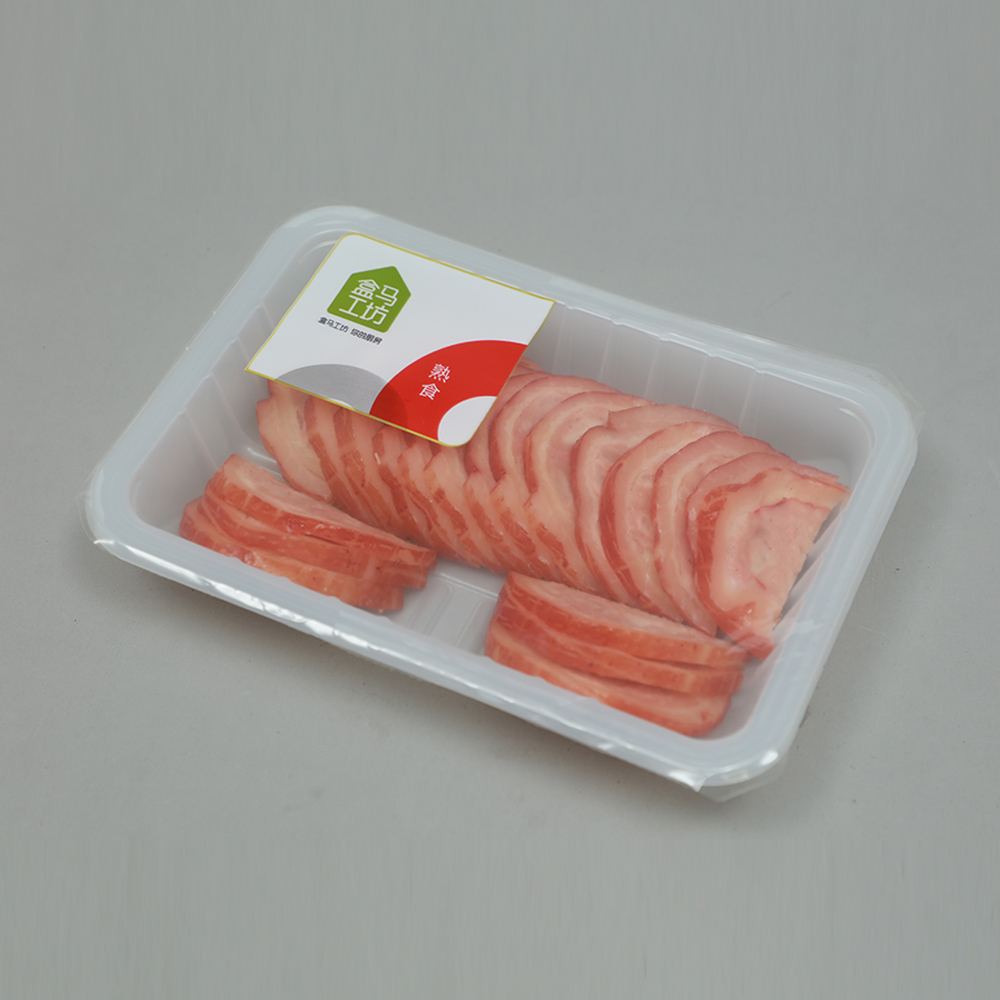
Modified Atmosphere Packaging (MAP) is a technique where the air inside a food package is replaced with a controlled mixture of gases — typically CO₂, N₂, and/or O₂ — to slow spoilage and extend shelf life. The specific gas mixture varies by product type.
| Product | Typical Gas Mix | Purpose |
|---|---|---|
| Fresh red meat | 70–80% O₂ + 20–30% CO₂ | Maintain red color, inhibit bacteria |
| Poultry | 30% CO₂ + 70% N₂ | Inhibit aerobic bacteria |
| Fresh fish | 40% CO₂ + 30% O₂ + 30% N₂ | Bacterial inhibition |
| Ready meals | 30% CO₂ + 70% N₂ | Prevent oxidation, maintain freshness |
| Fresh produce | Varies (often 3–10% CO₂ + 3–8% O₂) | Slow respiration |
MAP packaging places strict demands on both the bottom (thermoforming) film and the top (lidding) film. The key requirement is gas barrier performance — the film must hold the modified atmosphere inside the package for the entire shelf life.
For MAP applications, we recommend our PA/EVOH/PE thermoforming film (bottom web) combined with our MAP lidding film (top web). The EVOH layer provides the critical oxygen barrier required to maintain the gas atmosphere throughout the product's shelf life.
Tell us your product and target shelf life — we'll recommend the right MAP film system.
Get Expert Advice